Supporting Israel Matters
October, 2026
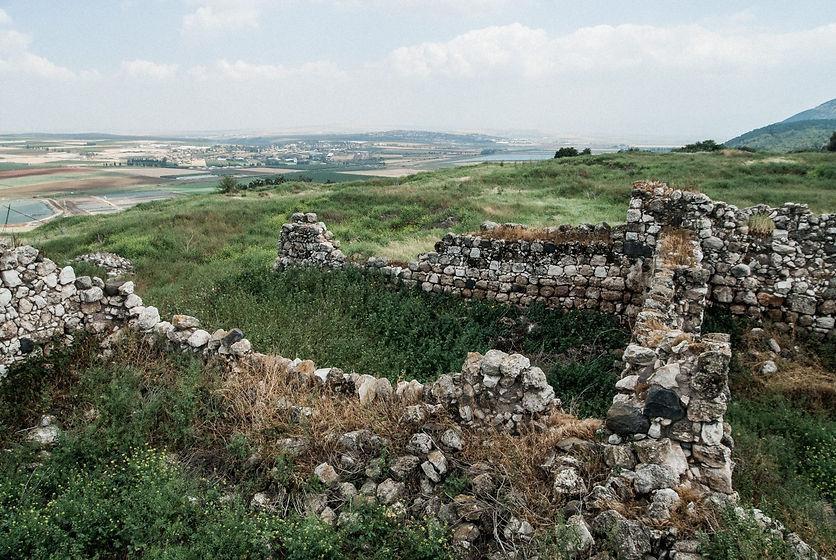

Uncovering the Motives of Elijah and Jezebel through the Archaeology of Tel Jezreel
The archaeological discoveries at Tel Jezreel, particularly an ancient rock-cut winery discovered by the Jezreel Expedition in 2013, provide an extraordinary opportunity to explore the Biblical, historical, and geographical world of the prophet Elijah, King Ahab, and Queen Jezebel.
Two biblical narratives form the foundation of this investigation: Elijah's confrontation with the prophets of Baal on Mount Carmel in 1 Kings 18 and Ahab and Jezebel's seizure of Naboth's vineyard in 1 Kings 21.
These accounts reveal two dimensions of the same conflict. On Mount Carmel, Elijah confronts the religious practices promoted under Ahab and Jezebel. At Jezreel, he confronts the monarchy's abuse of power and its violation of an Israelite family's ancestral inheritance.
The archaeological significance of Tel Jezreel is not that archaeologists have discovered an object bearing Elijah's name or a vineyard definitively identified as Naboth's. Rather, they have uncovered physical remains of a settlement, a major wine-producing installation, and a fortified administrative or military center that fit the geographical and economic setting described in the Book of I Kings.
The strongest discoveries include:
- A substantial rock-cut winery with a grape-treading floor, collection vats, and additional processing features.
- An Iron Age fortified enclosure associated chronologically with the northern Kingdom of Israel.
- Architectural evidence suggesting a strategically important administrative or military center overlooking the Jezreel Valley.
- Archaeological surveys identifying hundreds of agricultural, burial, water-storage, and quarrying features.
- Evidence that ancient Jezreel was considerably more extensive than the fortified hilltop excavated during the 1990s.
The major modern research project was directed by archaeologists Norma Franklin of the University of Haifa and Jennie Ebeling of the University of Evansville. Their findings appeared in Biblical Archaeology Review, archaeological journals, university publications, and excavation reports.(1, 2, 3, 4).
One particularly compelling possibility is that the winery uncovered at the foot of Tel Jezreel represents the kind of valuable agricultural property that Naboth refused to surrender to King Ahab. The researchers have explicitly explored whether it might be associated with the vineyard remembered in 1 Kings 21.
Tel Jezreel provides significant archaeological support for the historical setting of the Elijah narratives
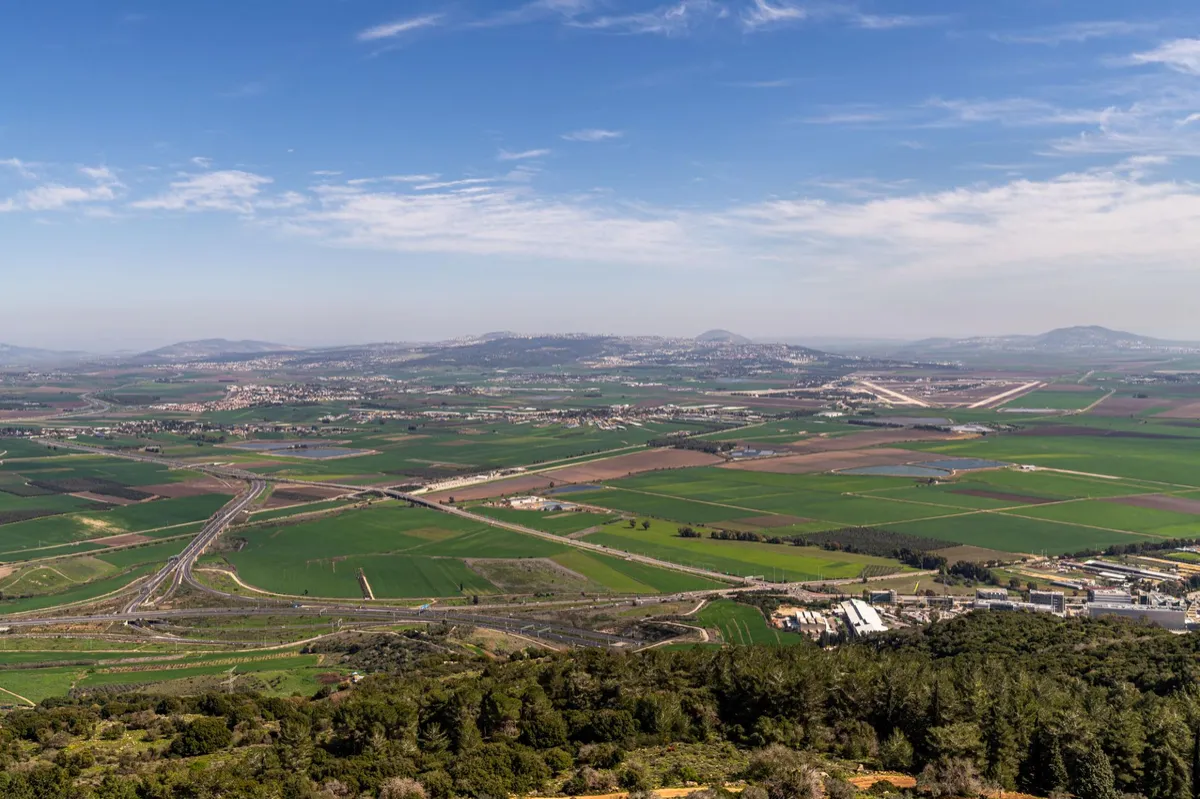
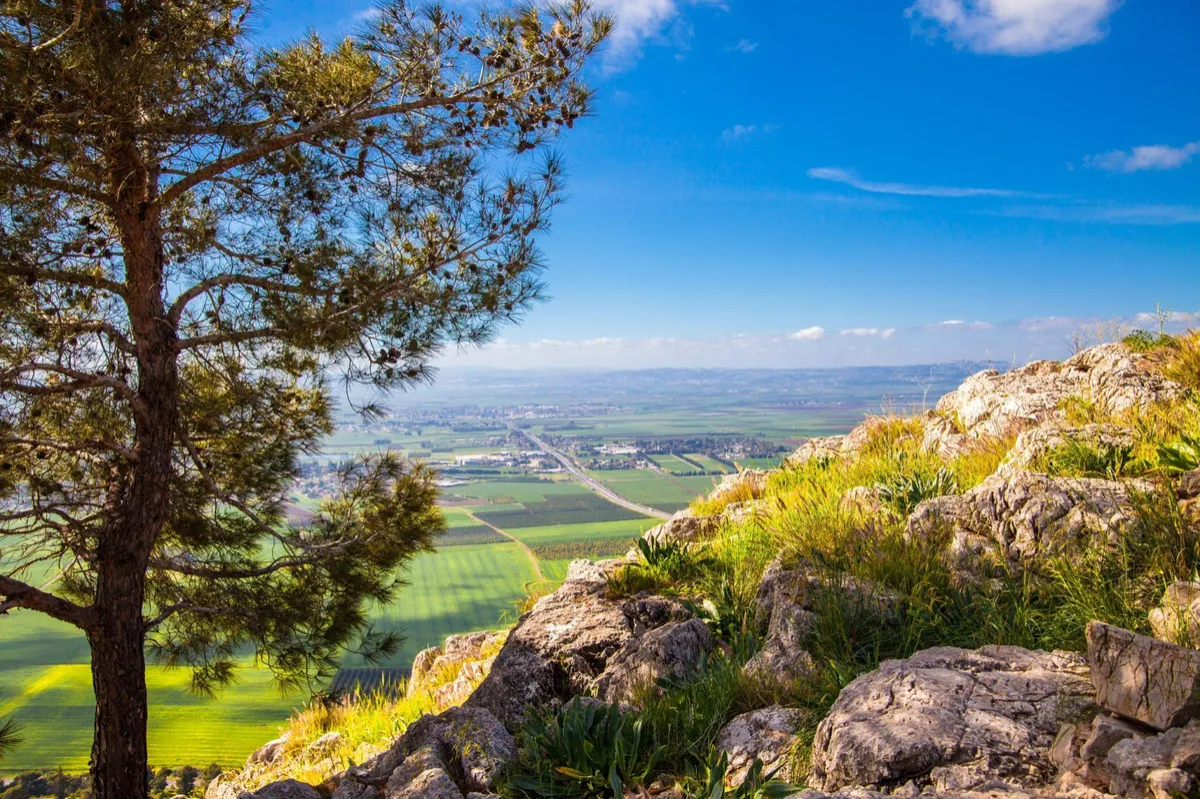
Jezreel Valley from Mount Carmel
Part I — The Biblical story: Elijah and the Prophets of Baal
The Religious Crisis Under Ahab and Jezebel
The confrontation on Mount Carmel occurred during the reign of Ahab, king of the northern Kingdom of Israel, generally placed in the ninth century BC.
According to 1 Kings 16:31–33, Ahab married Jezebel, daughter of Ethbaal, king of the Sidonians, and promoted the worship of Baal. He erected a temple and altar to Baal in Samaria and made an Asherah.
Jezebel's influence was particularly important. The biblical narrative portrays her not merely as a foreign queen who practiced a different religion but as an active opponent of Israel's prophets. In 1 Kings 18, the land is suffering from a severe drought. The contest on Mount Carmel concerns which deity possesses the power to control rain, agricultural fertility, and the survival of the nation.
This is important because Baal was associated with storms, rain, and fertility in ancient Levantine religion.
The contest is therefore especially pointed: during a prolonged drought, Elijah challenges Baal's prophets to demonstrate whether their god can answer by fire.
The confrontation on Mount Carmel: 1 Kings 18:19–40 (KJV)
"Now therefore send, and gather to me all Israel unto mount Carmel, and the prophets of Baal four hundred and fifty, and the prophets of the groves four hundred, which eat at Jezebel's table."
"And Elijah came unto all the people, and said, How long halt ye between two opinions? if the LORD be God, follow him: but if Baal, then follow him. And the people answered him not a word."
The reference to the prophets eating at Jezebel's table is significant. It depicts the queen as a royal patron of religious institutions, with resources available to support hundreds of religious personnel. This is one of the points at which the archaeology of Jezreel becomes relevant. An economically powerful monarchy with fortified centers, agricultural estates, and wine-producing facilities provides a plausible institutional setting for such royal patronage. It illustrates the economic resources potentially available to the monarchy.
Elijah's challenge: 1 Kings 18:22–24 (KJV)
Elijah proposes a test involving two bullocks, two prepared sacrifices, and no humanly kindled fire.
1 Kings 18:24 (KJV)
"And call ye on the name of your gods, and I will call on the name of the LORD: and the God that answereth by fire, let him be God. And all the people answered and said, It is well spoken."
The terms of the challenge are simple. The prophets of Baal will prepare their sacrifice and call upon their deity. Elijah will prepare another sacrifice and call upon the LORD.
The deity who responds with fire will demonstrate divine authority. The setting on Mount Carmel is meaningful because the mountain overlooks important agricultural lands, including the Jezreel Valley. The Biblical narrative connects divine authority with the rain upon which the agricultural economy depended.
Elijah Mocks the Prophets of Baal: 1 Kings 18:25–29
This is one of the most memorable passages in the story of Elijah. The prophets of Baal begin their appeals in the morning, continuing until midday without receiving an answer. 1 Kings 18:26 (KJV)
"And they took the bullock which was given them, and they dressed it, and called on the name of Baal from morning even until noon, saying, O Baal, hear us. But there was no voice, nor any that answered. And they leaped upon the altar which was made."
Then Elijah begins openly ridiculing them.
1 Kings 18:27 (KJV)
"And it came to pass at noon, that Elijah mocked them, and said, Cry aloud: for he is a god; either he is talking, or he is pursuing, or he is in a journey, or peradventure he sleepeth, and must be awaked."
Elijah's mockery is unusually direct. He suggests several possible explanations for Baal's failure to respond: perhaps Baal is occupied in conversation, engaged in private business, traveling, or asleep. The Hebrew wording behind the KJV's "pursuing" is debated. Some interpreters understand it as a euphemistic reference to relieving oneself. If that interpretation is correct, Elijah's sarcasm is even sharper than many English readers realize. The theological point is that a deity who must be awakened, located, or interrupted cannot exercise the sovereign authority claimed for him.
The prophets respond by increasing the intensity of their rituals.
1 Kings 18:28–29 (KJV)
"And they cried aloud, and cut themselves after their manner with knives and lancets, till the blood gushed out upon them."
"And it came to pass, when midday was past, and they prophesied until the time of the offering of the evening sacrifice, that there was neither voice, nor any to answer, nor any that regarded."
The repeated emphasis on the absence of an answer is deliberate. Prolonged ritual efforts of Baal's prophets are then contrasted with the comparatively brief prayer Elijah will offer. We see a conflict between the religious practices supported by Jezebel and the covenantal worship defended by Elijah.
Elijah Rebuilds the Altar: 1 Kings 18:30–35
Elijah calls the people near and repairs an Altar of the LORD that had been broken down.
1 Kings 18:31 (KJV)
"And Elijah took twelve stones, according to the number of the tribes of the sons of Jacob, unto whom the word of the LORD came, saying, Israel shall be thy name."
The twelve stones symbolically invoke the unity of Israel, even though the kingdom had been divided politically into Israel and Judah. Elijah then prepares the sacrifice, digs a trench around the altar, and orders water poured over the offering and wood three times.
1 Kings 18:35 (KJV)
"And the water ran round about the altar; and he filled the trench also with water."
The water makes the anticipated ignition more dramatic. Although we are in the same area where Elijah built the Altar, the actual archaeological site has not yet been discovered.
Elijah's Prayer and the Fire from Heaven: 1 Kings 18:36–40
Elijah's prayer explicitly connects the demonstration with the covenantal God of Israel.
1 Kings 18:36–37 (KJV)
"LORD God of Abraham, Isaac, and of Israel, let it be known this day that thou art God in Israel, and that I am thy servant, and that I have done all these things at thy word."
"Hear me, O LORD, hear me, that this people may know that thou art the LORD God, and that thou hast turned their heart back again."
The response is described in 1 Kings 18:38:
"Then the fire of the LORD fell, and consumed the burnt sacrifice, and the wood, and the stones, and the dust, and licked up the water that was in the trench."
The Israelites respond by acknowledging the LORD as God. Elijah then commands the seizure of Baal's prophets, who are taken to the brook Kishon and killed. We see a narrative of religious confrontation, judgment, and restoration of covenantal allegiance. The Kishon River runs through the broader Carmel–Jezreel landscape, providing a real geographical setting for the account.

Take a break and order some delicious Chocolate Wafers made by the bakers of Manamim just a couple miles from where Elijah called down fire and beat the prophet's of Baal.
Part II — From Mount Carmel to Jezreel
The Geographical Relationship between the two Biblical Accounts
Mount Carmel lies west of the Jezreel Valley, while the traditional site of Elijah's confrontation, Muhraqa, occupies a prominent position along the southeastern Carmel ridge. Tel Jezreel lies farther east, near the eastern end of the valley, overlooking important ancient travel routes and agricultural lands and the Bible links the two locations.
Following the contest on Mount Carmel and the return of rain, 1 Kings 18:45–46 records Ahab traveling toward Jezreel while Elijah runs ahead of him.
1 Kings 18:45–46 (KJV)
"And it came to pass in the mean while, that the heaven was black with clouds and wind, and there was a great rain. And Ahab rode, and went to Jezreel."
"And the hand of the LORD was on Elijah; and he girded up his loins, and ran before Ahab to the entrance of Jezreel."
This passage is crucial because it explicitly connects the Mount Carmel episode with Jezreel. But our story isn't finished with the contest on the mountain. It concludes with Ahab and Elijah returning toward the royal center at Jezreel.
The fortified settlement excavated at Tel Jezreel provides an archaeological setting for the destination mentioned at the end of 1 Kings 18 though archaeologists have not yet identified the gate through which Ahab entered or the precise road Elijah followed. Tel Jezreel does prove to be a strategically situated Iron Age center at the Biblical location.
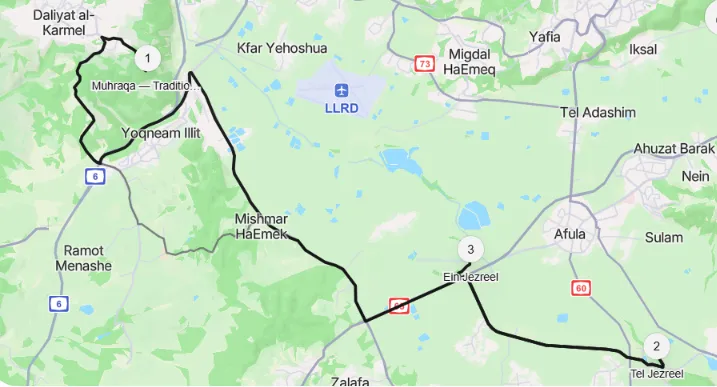
Naboth's Vineyard: 1 Kings 21:1–4
As our story around Mount Carmel continues, it moves from a public religious confrontation to a conflict over private property, inheritance, and royal power.
1 Kings 21:1–3 (KJV)
"And it came to pass after these things, that Naboth the Jezreelite had a vineyard, which was in Jezreel, hard by the palace of Ahab king of Samaria."
"And Ahab spake unto Naboth, saying, Give me thy vineyard, that I may have it for a garden of herbs, because it is near unto my house: and I will give thee for it a better vineyard than it; or, if it seem good to thee, I will give thee the worth of it in money."
"And Naboth said to Ahab, The LORD forbid it me, that I should give the inheritance of my fathers unto thee."
This passage identifies three elements central to the archaeological investigation:
First, the property is located in Jezreel. Second, it is near a royal structure associated with Ahab. Third, there is a vineyard, an economically valuable agricultural holding.
The ancient winery discovered at Tel Jezreel is relevant because it demonstrates that grape processing occurred in the immediate vicinity of the ancient settlement.
It is particularly intriguing that the winery lies below the fortified hilltop, near the agricultural terraces. That physical relationship resembles the Biblical description of a vineyard located near Ahab's royal residence although this remains open to archaeological interpretation.
Jezebel's Conspiracy: 1 Kings 21:5–16
When Naboth refuses to sell his inheritance, Ahab returns home resentful and refuses to eat. Jezebel responds by taking control of the situation.
1 Kings 21:7 (KJV)
"And Jezebel his wife said unto him, Dost thou now govern the kingdom of Israel? arise, and eat bread, and let thine heart be merry: I will give thee the vineyard of Naboth the Jezreelite."
The queen then arranges a conspiracy involving royal correspondence, local leaders, false witnesses, and an accusation of blasphemy!
1 Kings 21:8 (KJV)
"So she wrote letters in Ahab's name, and sealed them with his seal, and sent the letters unto the elders and to the nobles that were in his city, dwelling with Naboth."
The reference to sealed correspondence is consistent with administrative practices known from the ancient Near East. Archaeological discoveries throughout Israel have established the widespread use of seals and seal impressions in administration.
1 Kings 21:13 (KJV)
"And there came in two men, children of Belial, and sat before him: and the men of Belial witnessed against him, even against Naboth, in the presence of the people, saying, Naboth did blaspheme God and the king. Then they carried him forth out of the city, and stoned him with stones, that he died."
Jezebel's actions are portrayed as an abuse of both religious and civil institutions. She uses the appearance of lawful judicial proceedings to accomplish a predetermined murder. Naboth's refusal was not merely a dispute over price. In the Biblical context, ancestral land represented a family's continuing place within Israel's Abrahamic covenantal inheritance. Israel's right to the Land. This explains why Naboth rejects Ahab's offer even though the king proposes compensation or a better vineyard.
Elijah Confronts Ahab again: 1 Kings 21:17–29
After Naboth's execution, Ahab goes to take possession of the vineyard and Elijah is commanded to confront him.
1 Kings 21:19 (KJV)
"Thus saith the LORD, Hast thou killed, and also taken possession? And thou shalt speak unto him, saying, Thus saith the LORD, In the place where dogs licked the blood of Naboth shall dogs lick thy blood, even thine."
Elijah's confrontation moves the prophetic conflict beyond idolatry. The king is condemned for participating in the seizure of an innocent man's property through murder.
1 Kings 21:20 (KJV)
"And Ahab said to Elijah, Hast thou found me, O mine enemy? And he answered, I have found thee: because thou hast sold thyself to work evil in the sight of the LORD."
Here, Ahab's moral responsibility is explicitly connected to the actions undertaken by Jezebel. Although Jezebel orchestrates the false accusation and execution, Ahab accepts the resulting property.
1 Kings 21:23 (KJV)
"And of Jezebel also spake the LORD, saying, The dogs shall eat Jezebel by the wall of Jezreel."
This prophecy creates another geographical connection with the archaeological site. The location is not simply the place where Naboth's vineyard stood. It becomes the setting for the judgment pronounced upon Jezebel. The fulfillment appears in 2 Kings 9:30–37, where Jezebel is thrown from a window at Jezreel during Jehu's revolt.
The excavated fortified center demonstrates that a significant royal or military establishment existed at Jezreel during the time of the Kings. What an amazing moment to contemplate the location where Jezebel may have been thrown to her death.
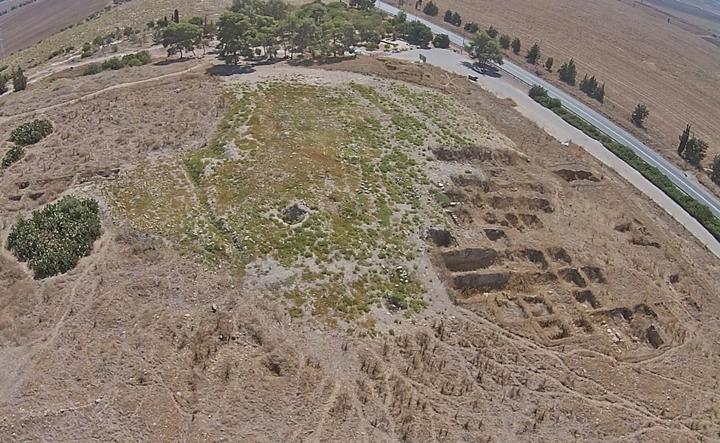
Excavations at Tel Jezreel
Part III — Archaeological Discoveries at Tel Jezreel
Fortified Royal Center Excavations
The first major modern excavation campaign at Tel Jezreel took place in the 1990s under David Ussishkin and John Woodhead. Their work uncovered evidence of a large fortified enclosure, including substantial architectural remains associated with the Iron Age. This was an important connection as the Bible depicts Jezreel as a center of royal activity during the Omride Dynasty.
In Biblical Archaeology Review (July/August 2010) (5), Ussishkin presented the site in an article titled Jezreel—Where Jezebel Was Thrown to the Dogs. He examined how the excavated fortifications and settlement history relate to the Biblical account of the royal family and Jehu's revolt.
The enclosure's commanding position is especially significant. Jezreel overlooked the eastern Jezreel Valley, a major corridor connecting the Mediterranean region with the Jordan Valley and territories farther east. Control of this location would have offered strategic advantages for monitoring movement, administering surrounding agricultural lands, and supporting military operations. Ahab's reign is associated with considerable military activity and the fortified center is consistent with the broader picture of the organized and economically capable Israelite monarchy. The Bible proven again!
The Jezreel Expedition: Discovering a Larger Ancient Settlement
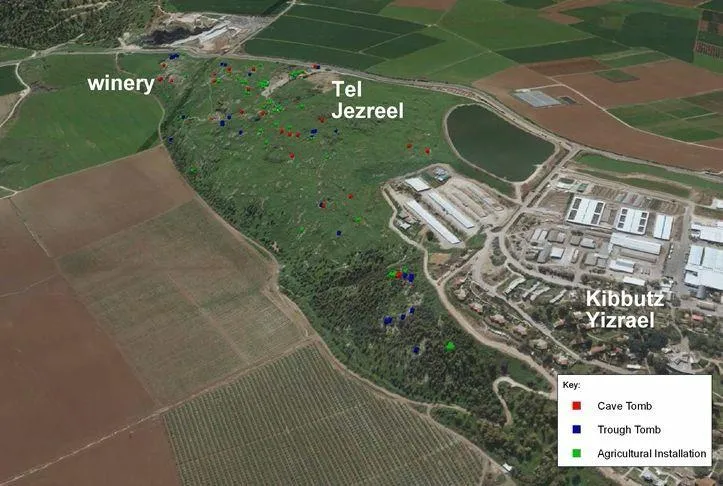
In 2012, Norma Franklin and Jennie Ebeling established the Jezreel Expedition to investigate a broader landscape than the hilltop fortress. Their approach was based on the recognition that ancient Jezreel was not limited to its fortified center. They used LiDAR mapping, fieldwalking, GPS recording, and archaeological excavation to investigate the slopes, terraces, agricultural installations, and settlement areas around the mound.
A 2016, Biblical Archaeology Society(6) report describes the identification of 361 archaeological features, including:
60 Tombs
57 Agricultural installations
21 Ancient quarries
100 Cisterns
These discoveries, along with recovered walls and additional remains changed the interpretation of Jezreel. Rather than viewing it exclusively as a hilltop fortress, archaeologists began to reconstruct a larger settlement with surrounding agricultural and industrial activity. These discoveries are especially relevant to the Biblical text about Naboth because vineyards and wineries were part of the economic landscape of ancient Jezreel.
The landscape survey demonstrated that this was not merely a military outpost isolated from agricultural production. All of the surrounding region contained substantial infrastructure for cultivating, processing, and storing agricultural products.
Ancient Winery Discovery
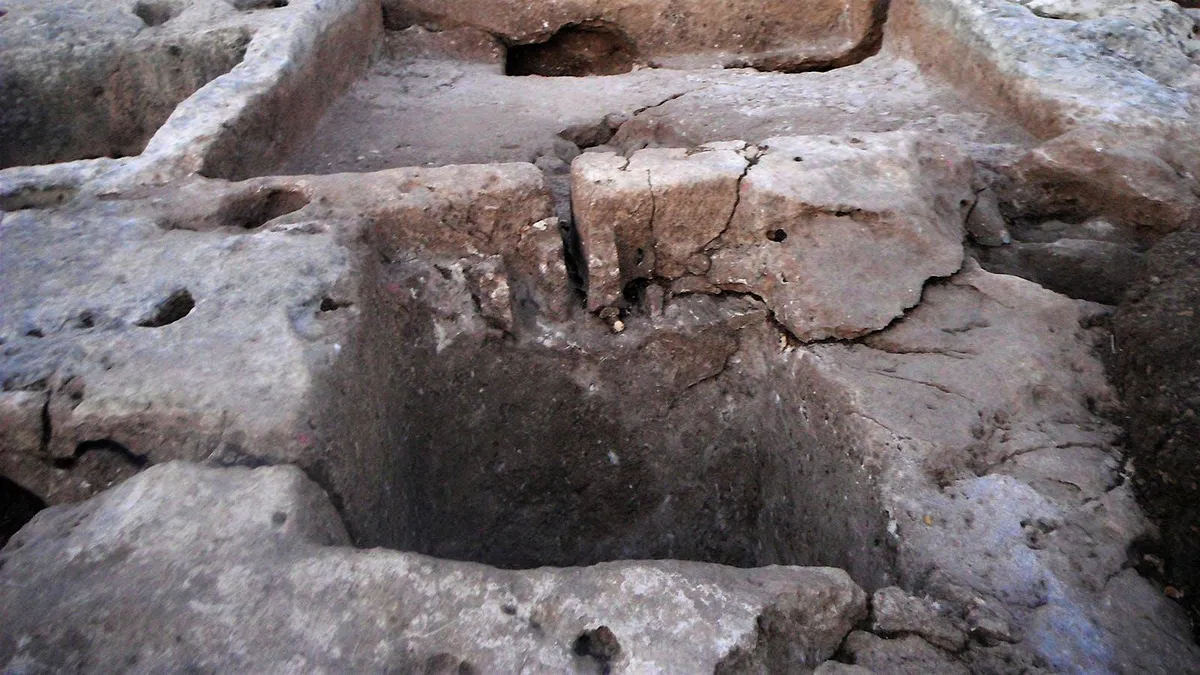
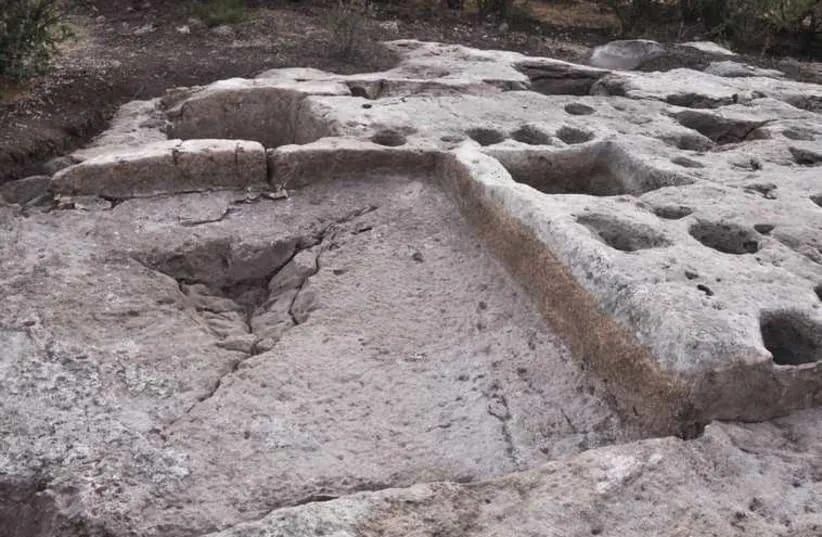
The most significant discovery for understanding 1 Kings 21 occurred during the Jezreel Expedition's inaugural excavation season in 2013. Archaeologists investigated an agricultural installation designated Area K, situated at the foot of the northern slope of Tel Jezreel. A rock-cut winery was excavated consisting of a treading floor, two substantial collection vats, additional depressions, and associated processing features. Findings reported a treading floor of approximately 3.2 square meters and two adjacent square vats, each about 1.3 meters on a side and more than one meter deep with the installation cut directly into limestone bedrock.
The investigators also documented a geological complication: basalt boulders intersected parts of the limestone installation. Rather than remove all the basalt, the ancient workers shaped the winery around some of these obstructions. A valuable detail which demonstrates the practical decisions made by the builders. This winery was not a hypothetical feature inferred from a Biblical passage. It was a functioning wine manufacturing center created through substantial labor and adapted to the local geology.
Winery Operations
The installation's design allows archaeologists to reconstruct its likely use. Workers would place harvested grapes on the treading floor, where the fruit could be crushed underfoot. Resulting juice would flow into a collection vat. Further processing, settling, and fermentation would then produce wine. The installation's associated pits and basins may have served different functions in processing or supporting production.
A photograph published in Biblical Archaeology Review(6) identifies the main components as a treading floor, two vats, a basin, and numerous mortars or pits.
The discovery indicates organized wine production rather than simply the presence of grapevines. Which is important because a vineyard represents agricultural investment, adds infrastructure, labor, processing capacity, and potential commercial value.
If Naboth's property included mature vines and access to a substantial wine-processing installation, the economic value of the property could have been considerable.
That possibility helps explain why a king might desire the land and why the loss of the property would represent far more than the loss of a small garden. It also challenges the assumption that Naboth was necessarily an impoverished farmer. He may have controlled valuable productive property.
In November/December 2017, Norma Franklin, Jennie Ebeling, Philippe Guillaume, and Deborah Appier published, "Have We Found Naboth's Vineyard at Jezreel?" in Biblical Archaeology Review,(7) volume 43, number 6, pages 49–54. This is the single most relevant article for connecting the archaeological findings with 1 Kings 21.
The researchers brought together the excavated winery, the topography of the site, the Biblical narrative, and the economic importance of grape production.
Their argument proposes the historical landscape behind the Biblical story. The winery lies near the fortified center, in a landscape suitable for vineyards. This matches the broad geographical requirements of 1 Kings 21. They further explain the Hebrew terminology traditionally translated as Ahab's palace may refer to a substantial royal or military building rather than necessarily a conventional residential palace. Their central suggestion is that the archaeological landscape could have inspired or preserved the memory of a real conflict over vineyard property at Jezreel.
More Revelations from Additional Excavations
The 2013 preliminary report by Franklin and Ebeling's excavation is particularly valuable because it describes the discoveries as they were first being excavated.
The expedition investigated three principal areas: Area M on the northern edge of the upper mound, Area K containing the winery, and Area S near the spring.
Area M exposed monumental rock-cut architectural remains associated with a cistern and cave complex. The researchers observed architectural similarities to royal construction at Samaria, including the use of bedrock, internal water storage, and strategic positioning.
They suggested a possible connection between an early Iron Age II phase at Jezreel and the Omride building program at Samaria. The location of Area M is especially revealing because this elevated position made it possible for an ancient observer to survey routes across the Jezreel Valley. Another reason why Jezreel would have been valuable to the kings of Israel. It also provides context for 1 Kings 18:46, where Elijah runs ahead of Ahab toward the entrance of Jezreel. The Biblical record places the king's destination at a strategically important settlement, not an insignificant agricultural village.
Part IV — Archaeology Insight into Elijah's Confrontations
Connections between Baal Worship and Agricultural Prosperity
These two Bible Stories about Elijah share an important theme: the relationship between divine authority, agricultural prosperity, and the responsibilities of Israel's king.
In 1 Kings 18, Elijah confronts the prophets of Baal during a devastating drought. In 1 Kings 21, he confronts Ahab after the king acquires a vineyard through an injustice orchestrated by Jezebel.
The archaeological discovery of a major winery at Jezreel makes the economic importance of agriculture tangible. Ancient vineyards represented years of cultivation and investment. Wine could be consumed locally, stored, exchanged, and potentially supplied to royal or military establishments. Land that sustained the population also contributed to the resources and authority of the monarchy.
This provides an interesting theological connection. At Mount Carmel, Elijah challenges the claim that Baal controls the agricultural fertility upon which the people depend. At Jezreel, Elijah challenges the king's assumption that political power gives him the right to seize another man's agricultural inheritance. In both episodes, Elijah confronts claims to authority that the Biblical regards as illegitimate.
Jezebel is central in both accounts. In 1 Kings 18:19, she is associated with the support of hundreds of prophets. In 1 Kings 21, she uses the authority of Ahab's royal seal to orchestrate Naboth's execution. These portrayals emphasize her influence over religious and administrative institutions. The excavated fortifications and associated settlement infrastructure at Jezreel are consistent with the existence of a sophisticated northern Israelite monarchy and suggest organized construction, strategic planning, water management, and control of a valuable agricultural landscape. Now we have a plausible background for royal power.
The Irony of Naboth's Vineyard
The plot thickens! Ahab is king over Israel, yet he cannot obtain a relatively small parcel of land without the owner's consent. Naboth, who lacks royal authority, nevertheless possesses something that the king cannot legitimately take: an ancestral inheritance. Jezebel resolves the problem through a judicial conspiracy, turning the institutions intended to uphold justice into instruments of injustice. The ancient winery helps illuminate why such a property might have been desirable.
A productive vineyard could have considerable economic value, especially if located near a royal center and an established processing installation. Tel Jezreel's Winery makes the dispute easier to understand in concrete economic terms. Market valuation of the vineyard is not the most important issue in I Kings 18, It is the difference between lawful authority and the abuse of power. In 2 Kings 9, Jehu rebels against the Omride dynasty. Joram, Ahab's son, is killed, and Jezebel meets her death at Jezreel.
2 Kings 9:30–33 (KJV), selected verses
"And when Jehu was come to Jezreel, Jezebel heard of it; and she painted her face, and tired her head, and looked out at a window."
"Then said Jehu, Throw her down. So they threw her down: and some of her blood was sprinkled on the wall, and on the horses: and he trode her under foot."
The account concludes with the fulfillment of the judgment pronounced against Jezebel. In God's economy, he just will always be vindicated and the wicked will be punished!

Part V - Conclusion
How Tel Jezreel Brings Together the Stories of Elijah, Ahab, Jezebel, and Naboth
The archaeological discoveries at Tel Jezreel offer a remarkable opportunity to bring together the stories of Elijah, Ahab, Jezebel, and Naboth. In geographic context,
I Kings 18 explicitly places Ahab and Elijah traveling from Mount Carmel to Jezreel after the confrontation with the prophets of Baal. Archaeology confirms that Jezreel was an important ancient settlement occupying a strategic position above the valley. The fortified enclosure provides a physical setting consistent with the presence of royal or military activity at Jezreel during the northern monarchy.
The most compelling connection is the winery. The discovery of a substantial rock-cut wine-producing installation near the fortified center corresponds to the type of agricultural property described in 1 Kings 21. Its location near the settlement, association with productive agricultural land, and potential economic importance all help explain why the biblical account centers on a coveted vineyard.
Resulting in this theological conclusion:
The two Elijah narratives portray the prophet confronting the same monarchy over two different questions: whom Israel should worship and how Israel's rulers should exercise power. On Mount Carmel, Elijah challenges the religious authority of Baal's prophets. At Jezreel, Elijah challenges Ahab's seizure of an innocent man's inheritance.
The physical remains at Jezreel provide a tangible setting for the latter conflict while helping readers understand the broader political and agricultural world of both narratives.
The strongest conclusion is not that archaeologists have proven Naboth's vineyard has been found. It is that archaeology has once again uncovered a landscape remarkably appropriate to the Biblical account, including a fortified center and substantial ancient wine production in the very location where the narrative places Ahab, Jezebel, and Naboth.
If you enjoyed this month's Newsletter - Please consider helping us bring future issues your way and support Israeli businesses when you become a Friend of Israel Member!
Bibliography and Links to Source Articles
The following sources include original excavation reports, academic research, and articles published by the Biblical Archaeology Society. Some journal articles may require a subscription or institutional access.
1. Franklin, Norma; Ebeling, Jennie; Guillaume, Philippe; and Appier, Deborah. (2017).
Have We Found Naboth's Vineyard at Jezreel? Biblical Archaeology Review 43(6), 49–54.
The principal article arguing for a possible connection between the excavated winery and the Naboth narrative.
Read article / available full text · University of Haifa publication record
2. Dospěl, Marek. (2017).
Naboth's Vineyard Unearthed at Tel Jezreel? Biblical Archaeology Society, November 6, 2017.
An accessible illustrated introduction to the winery and its possible relationship to 1 Kings 21.
3. Franklin, Norma; Ebeling, Jennie; Guillaume, Philippe; and Appler, Deborah. (2020).
An Ancient Winery at Jezreel, Israel. Journal of Eastern Mediterranean Archaeology and Heritage Studies 8(1), 58–78.
The detailed technical study of the winery's construction, function, typology, and dating.
Article and available full text
4. Franklin, Norma, and Ebeling, Jennie. (2013).
Preliminary Report of the 2013 Jezreel Expedition Field Season. The Bible and Interpretation.
Original field report documenting the discovery and excavation of the winery, with photographs of Area K.
Read illustrated excavation report
5. Franklin, Norma, and Ebeling, Jennie. (2013).
Archaeological Views: Returning to Jezreel. Biblical Archaeology Review 39(3), 28, 70.
Explains why the new expedition was launched and describes the wider archaeological landscape.
6. Biblical Archaeology Society. (2016).
Jezreel Expedition Sheds New Light on Ahab and Jezebel's City.
Describes LiDAR mapping, archaeological surveys, and hundreds of newly documented features.
7. Franklin, Norma, and Ebeling, Jennie. (2015).
Preliminary Report of the 2015 Jezreel Expedition Field Season. The Bible and Interpretation.
Documents excavation work near the spring, pathways, burial areas, and the winery.
Read illustrated excavation report
8. Ebeling, Jennie, and Franklin, Norma. (2016).
Jezreel Expedition 2016: You Don't Have to Be an Archaeologist to Dig the Bible.
Introduces the 2016 field season and the project's historical objectives.
9. Ebeling, Jennie, and Franklin, Norma. (2016).
Jezreel Expedition 2016: Jezreel Through Time.
Describes the 2016 discoveries and illustrates the site's long history.
10. Ussishkin, David. (2010).
Jezreel—Where Jezebel Was Thrown to the Dogs. Biblical Archaeology Review 36(4), 32–42, 75–76.
An important archaeological interpretation of the fortified center and its relationship to the Omride dynasty.
Read article (library access may be required)
11. Ussishkin, David, and Woodhead, John. (1992, 1994, 1997).
Excavations at Tel Jezreel, preliminary reports in Tel Aviv and Levant.
Foundational archaeological publications documenting the 1990s excavations of the Iron Age fortified center.
View complete report references
12. Biblical Archaeology Society.
Israelite Chariots in the Assyrian Period (2011).
A scholarly exchange involving David Ussishkin and Boyd Seevers about chariot evidence and its relevance to Ahab's period.